A Science-Backed Reimagining of Drug Prevention, Student Success

Rutgers addiction researchers, student affairs professionals collaborate on All About U
When Amber Kankam logged into Rutgers University–New Brunswick’s new All About U portal, a 20-question personality assessment identified her as conscientious, introverted and prone to worry.
“It felt pretty accurate,” said Kankam, a public health major.
The Rutgers-developed platform then analyzed her strengths and challenges and recommended campus resources tailored to her needs. For Kankam, that meant guidance on managing anxiety and recognizing how it can fuel success, along with connections to Career Exploration and Success, Counseling Services and other Rutgers programs.
As it does for all personality types, All About U also discussed risks related to alcohol and other drugs; students prone to anxiety, for example, may at times feel tempted to harmfully self-medicate. Its campus-related resources included guidance on making wiser, self-protective choices.
All About U launched this summer as Rutgers–New Brunswick’s science-based reimagining of the drug and alcohol prevention training that colleges are federally required to provide incoming students.
Created through a first-of-its-kind partnership between the Rutgers Addiction Research Center and the Rutgers–New Brunswick Division of Student Affairs, the 20-minute program grew from a National Institutes of Health-funded study examining how to deliver drug prevention education that incorporates the latest scientific advances, while being engaging and useful for students, said Professor Danielle Dick, director of the center within the Rutgers Brain Health Institute and lead developer of All About U.
Rutgers–New Brunswick Chancellor Francine Conway said, “All About U is a great example of what can happen when people across Rutgers bring their expertise together around our students. By pairing research and behavioral science with the experience of our Student Affairs colleagues, the team has created a more personalized approach that helps students better understand their choices and connects them with support and resources here at Rutgers.”
Traditional drug prevention programs tend to provide students with lists of alcohol and drug facts, and to compare their habits with the “average” student’s use of those substances, Dick said. “But it’s no surprise that young people hate the idea of anything that sounds like they’re being lectured.”
All About U, Dick said, “takes a novel approach that incorporates new research on the pathways that can lead to harmful substance use. It’s individualized, with questions that invite students to reflect on themselves and their risk factors, what they want to get out of college and life, and how Rutgers is here to support them in making choices to get there. It’s also short: 20 minutes to complete, compared with the previous 90-minute program. I think of it as chocolate-covered broccoli: we’re trying to provide something good for students in a way they will enjoy.”
While it is too soon to quantify All About U’s contribution to healthy behavior—Rutgers–New Brunswick’s 8,000 new first-year students must complete the program this fall—evidence from its NIH-funded prototype is encouraging. The initial program, developed by Dick, found that participants reduced their alcohol use by 41% and cannabis use by 71% three months later, compared with peers who completed traditional programming.
The possibility for creating All About U arrived at an opportune moment, according to Amy Miele, Associate Director of Rutgers University’s Office of Employment Equity. At the time of All About U’s creation, Miele served in the Division of Student Affairs as Associate Dean of Students and Director for Student Affairs Compliance and Title IX.
The university was nearing the end of its contract for a vendor-provided prevention program. Student Affairs officials were exploring alternatives when they learned of the successful prototype that Dick and her colleagues had developed. Rather than purchase another off-the-shelf product, Student Affairs colleagues saw an opportunity to build a program rooted in science and tailored to Rutgers students, Miele said.
Beginning last fall, leaders from the Rutgers Addiction Research Center worked alongside Student Affairs staff, IT professionals and software developers to transform the prototype into a campus-wide platform. This ensured that All About U was equipped to refer students to the university’s robust array of student success resources, and broadened the program to include issues such as gambling and supporting friends in risky situations.
Miele, who until mid-September led the Dean of Students office that oversees compliance education including drug and alcohol modules, helped drive the effort to ensure it met Student Affairs’ requirements and exceeded federal standards. “Through a truly campuswide effort, we’ve created an elite program. One that helps our students without giving them an added burden.”
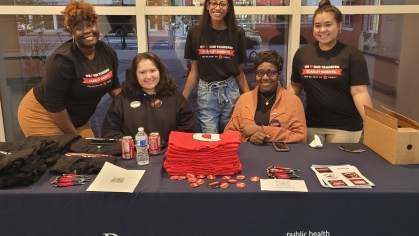
Kankam, a senior who works for Student Health as a Health Outreach, Promotion and Peer Education (HOPE) peer educator, was one of several students who test-drove the program and provided feedback to make it more effective. She said All About U reflects the HOPE ethos of providing guidance that is “empathetic, not shaming but educating, so they can have better outcomes when it feels like life is overtaking them.”